The isolation of tryptophan was first reported by Frederick Hopkins in 1901 through hydrolysis of casein. From 600 grams of crude casein one obtains 4-8 grams of tryptophan.

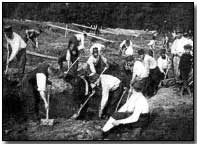
Encyclopedia - Trench Rats
Plants and microorganisms commonly synthesize tryptophan from shikimic acid or anthranilate. The latter condenses with phosphoribosylpyrophosphate (PRPP), generating pyrophosphate as a by-product. After ring opening of the ribose moiety and following reductive decarboxylation, indole-3-glycerinephosphate is produced, which in turn is transformed into indole. In the last step, tryptophan synthase catalyzes the formation of tryptophan from indole and the amino acid serine.

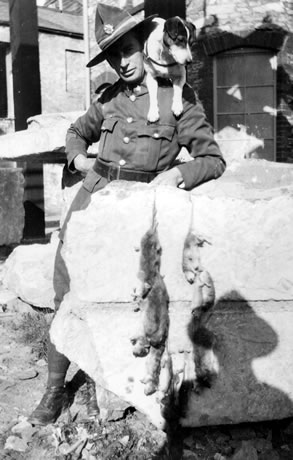
Floss and Percy with dead rats
The industrial production of tryptophan is also biosynthetic and is based on the fermentation of serine and indole using either wild-type or genetically modified bacteria such as B. amyloliquefaciens, B. subtilis, C. glutamicum or E. coli. These strains carry either mutations that prevent the reuptake of aromatic amino acids or multiple/overexpressed trp operons. The conversion is catalyzed by the enzyme tryptophan synthase.

World War I Rat Hunters in the

Our Popular Rat-Catchers

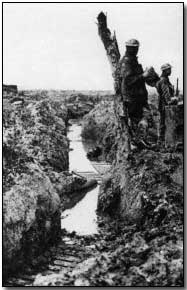
Water-filled trench at

alongside rats, filth,
Encyclopedia - Trench Rats
Plants and microorganisms commonly synthesize tryptophan from shikimic acid or anthranilate. The latter condenses with phosphoribosylpyrophosphate (PRPP), generating pyrophosphate as a by-product. After ring opening of the ribose moiety and following reductive decarboxylation, indole-3-glycerinephosphate is produced, which in turn is transformed into indole. In the last step, tryptophan synthase catalyzes the formation of tryptophan from indole and the amino acid serine.
Floss and Percy with dead rats
The industrial production of tryptophan is also biosynthetic and is based on the fermentation of serine and indole using either wild-type or genetically modified bacteria such as B. amyloliquefaciens, B. subtilis, C. glutamicum or E. coli. These strains carry either mutations that prevent the reuptake of aromatic amino acids or multiple/overexpressed trp operons. The conversion is catalyzed by the enzyme tryptophan synthase.

World War I Rat Hunters in the
Our Popular Rat-Catchers

Water-filled trench at
alongside rats, filth,


No comments:
Post a Comment